
VidMate
Free YouTube video & music downloader

ACTOR
Moira ShearerRobert RounsevilleLudmilla TchérinaAnn Ayars
DIRECTOR
Michael Powell,Emeric Pressburger
SYNOPSICS
The Tales of Hoffmann (1951) is a English movie. Michael Powell,Emeric Pressburger has directed this movie. Moira Shearer,Robert Rounseville,Ludmilla Tchérina,Ann Ayars are the starring of this movie. It was released in 1951. The Tales of Hoffmann (1951) is considered one of the best Fantasy,Music,Musical,Romance movie in India and around the world.
More
The Tales of Hoffmann (1951) Trailers





The Tales of Hoffmann (1951) Reviews
A magnificent filmic version of the Offenbach opera
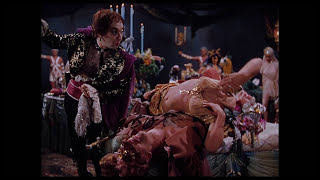
A magnificent spectacle. A truly filmic version of a classic opera. Often mentioned as a favourite movie and constant inspiration for young Martin Scorsese. With the audacity that Powell & Pressburger were famous for we are presented with a wonderful performance of a truly "composed" film. All the soundtrack was recorded by Sir Thomas Beecham and the Royal Philharmonic Orchestra and then the filming was all done on the open stage (it didn't need a sound stage) at Shepperton. With choreography by Sir Frederick Ashton and performances by ballet luminaries such as Moira Shearer, Ludmilla Tchérina, Robert Helpmann, Léonide Massine and Sir Frederick Ashton himself. Assisted by opera stars such as Robert Rounseville and Anne Ayars and the Sadler's Wells Chorus. All this backed by the designs of Hein Heckroth and the experienced team of technicians that worked regularly under the banner of The Archers leads to a treat to behold. The plot - from a 1951 (year of release) programme. The Prologue : The Opera House in Nurnberg (Nüemburg). Hoffmann sits in the auditorium watching a performance of the Dragonfly ballet. He is in love with Stella, the prima ballerina, who seems the embodiment of all his past loves. In the interval Hoffmann goes to Luther's Tavern. Here young students greet him. He sings them the ballad of Kleinzack. But the sight of Stella has reopened old wounds. "Would YOU hear the three tales of my folly of love?" lie asks. The students gather round the punch bowl, with Hoffmann's companion, Nicklaus, who has accompanied him throughout his adventures, and his enemy Lindorf. The Tale Of Olympia : As an inexperienced student in Paris, Hoffmann was tricked by two puppet-makers, Spalanzani and Coppelius, into falling in love with their latest creation, the doll Olympia. Spalanzani passes Olympia off as his daughter and hopes by this means to get some money from Hoffmann. At a ball given for her, Olympia sings the "Doll Song" and dances a ballet. Hoffmann is entranced. Only when Spalanzani and Coppelius fall out, and Coppelius destroys the doll in revenge does Hoffmann realise how he was fooled. The Tale Of Giulietta : As a young man of the world, he was enslaved by a beautiful Venetian courtesan, Giulietta. Acting under the influence of the magician Dapertutto, Giulietta captures his reflection and so gains possession of his soul. Hoffmann kills her former lover Schlemil in a duel, to get the key to her room. He hurries back to her, but finds she has left with Dapertutto. Mad with rage, he flings the key against her mirror. It cracks, and his reflection reappears. He has regained his soul. The Tale Of Antonia : As a mature artist and poet, Hoffmann falls in love with Antonia. Her mother, a singer, has already died of consumption (Tuberculosis). Crespel, her father, through grief at his wife's death, is now the half-mad wreck of a formerly great conductor. Crespel keeps his daughter in seclusion on an island in the Greek Archipelago and forbids her to aggravate her own weakness by singing. He also forbids his deaf servant Franz to admit either Hoffmann or the quack Dr. Miracle who killed his wife. Franz misunderstands, and in turn shows them in. Hoffmann realises Antonia is ill, and she promises him not to sing again. Dr. Miracle persuades her it is her mother's wish she should disobey. She does so, and dies in his arms. The Epilogue : On the stage of the Opera House, it is the finale of the Stella Ballet. In the tavern Hoffmann's audience is spellbound. Hoffmann's tales are told and with the telling Hoffmann finds his true destiny as a poet. Stella appears at the door of the tavern and looks down at him. But Lindorf, who has also understood the meaning of the Tales goes to meet her and together they pass out into the town.
Bravo, Tales of Hoffmann!
What a splendid film is this combination of opera and ballet for those partial to this type of fare. The performance of Robert Helpmann in four roles is exceptional and dancer Leonid Massine makes a chilling villain as Schlemil in the utterly fantastic "Tale of Giuletta". Ludmilla Tcherina as Giuletta is an alluring sex-goddess and enslaver of men. I am totally absorbed whenever I watch this episode. Having said all this, I must also say that the "Tale of Antonia" is a severe letdown after the two preceding episodes. It is not just the film version that is bad -- it was actually a letdown the first time I saw the opera live at the old Metropolitan Opera 45 years ago. Actually, there have been suggestions that the "Antonia" episode be moved from last to first episode sequentially in the opera, however I doubt if this would make a significant improvement. If I am correct, the "Antonia" episode was completed by another composer, Offenbach having died before completing Tales of Hoffmann. Ahhh...that hauntingly beautiful "Barcarolle"....nothing can compare to it!! And the film version is just icing on the cake.
A grand artistic vision
TALES OF Hoffman Powell & Pressburger This colorful film adaptation of an by Offenbach is a musical in the truest sense, meaning every bit of narrative and dialog is put forth by means of song. I am not in general the biggest fan of such endeavors, but it works quite well for this film, although some of the love paeans may be outstaying their welcome. In the story a poet Hoffman tells in episodic fashion about the many times that he has loved and lost. There have been several films made with such a theme but Hoffman stands well apart because of the Goth-fantastic nature of the narratives. Hoffman, in turn, falls in love with Olympia - a puppet, Guiletta - the temptress of a soul-stealing demon, and Antonia - a singer doomed by fatal consumptive illness. This narrative is complemented by the brilliantly supportive artistic design of the film. The makers construct a deliberate stage-like ambiance, with the use of representative backdrops, suitably exaggerated props and striking motifs to convey the settings and moods of the various episodes. In this aspect it shares strong kinship with Masaki Kobayashi's period ghost story anthology Kwaidan. You also have the concept of the same actor returning to play different parts in the various episodes of Hoffman's life, the most notable of which is Robert Helpmann who portrays the sinister element in all the episodes (and with his vampiric menacing look, does a terrific job of it, although his motive for evil in the Antonia episode goes unexplained). The fantastic elements of the plot, color-drenched distinctive look, intricate balletic choreography and excellent fit of all the actors in their roles make Tales of Hoffman a very interesting watching experience on the whole. One of my caveats with the film is that Hoffman's companion Nicklaus is never properly explained. Who is this woman in man's garb and why is she doing what she does?
I've never seen anything like it
"The Tales of Hoffmann" (1951) - a beautifully photographed film version of Jacques Offenbach's opera, his final masterpiece is a magic (and there is no other word to describe it) blend of Adventure / Romance / Fantasy / with an endless stream of gorgeous melodies, seductive and tender love scenes, bizarre characters - comic, romantic or villainous, and tragic climaxes. The film was a follow-up to "The Red Shoes" (1948) a fantasy/musical/romance/drama set in the world of ballet with the same directors, stars, and production designers. In "The Tales of Hoffmann", Robert Rounsevill stars as E.T.A. (Ernst Theodore Amadeus) Hoffmann, the poet and writer who tells three stories of his great but unhappy loves all ending tragically thanks to the meddling of his enemy, a supernatural villain (Robert Helpmann as quadruple evil, Lindorf, Coppelius, Dapertutto and Dr Miracle). Objects of Hoffmann's love and admiration include Olympia the wind-up doll (Moira Shearer who also plays Stella the dancer, the fourth and yet another Hoffmann's misadventure), Giulietta, the Venetian courtesan who sails away after trying to capture Hoffmann's soul (Ludmilla Tchérina -absolutely brilliant as the siren and the seductress who elegantly walks over the dead bodies, literally), and Antonia the beautiful opera-singer with the fatal voice and deadly illness. One of the greatest choreographers and dancers of the last century, Léonide Massine shines in three absolutely different roles demonstrating his talent as a dancer, strong emotions and tremendous humor. What makes "The Tales of Hoffmann" not just an ordinary screen adaptation but the stunning unforgettable event, the film which had inspired the future famous directors George Romero and Martin Scorsese to become the filmmakers is the perfect combination of fantasy, classical music, ballet, singing, stunning visual effects, imaginative and often bizarre and even disturbing images that would fit a horror movie (deconstructing Olympia the doll is horrifying), incredible but calculated feast of colors, their mixture, the unique color palette to match each story, camera work that is so innovative and dynamic that even now, 56 years after the film was made, looks fresh and modern. The feast for eyes, ears, and feelings, "The Tales of Hoffmann" is the love child of incredibly talented people from different epochs and countries. The opera by Jacques Offenbach, the French composer is based on the dark romantic fairy tales by the German E.T. A. Hoffmann. The team of two directors known as "The Archers", the British Michael Powell and the Hungarian Jew Emeric Pressburger who had to flee his country before the WWII, and their international team of stars, color consultants, choreographers and production designers made this miracle happen. The last but not the least is legendary Sir Thomas Beecham conducting the Royal Philharmonic Orchestra.
Different Aspects of Romance
Caution: Spoilers I first saw this as a 14-year-old in an art theater in San Antonio, Texas. I was impressed by what to me then was the complexity of the action, but the overall stories were explained by the theater manager over the speakers before each act started. The overall effect was stunning to a growing boy. I'd seen The Red Shoes, but this was the whole schmear -- opera, ballet, and movie effects all at once. It was not until much later that I understood the film to reflect the phases of a man's romantic perspective. The first tale was of a doll -- pure beauty. The second stage was purely sexual, with the action focusing on desire, up to and including a fight to the death to enter the woman's "private place" -- in this case, the boudoir. The final stage was the frailty of humanity, with Hoffmann urging the lovely Olympia to forego her great talent to save her life. In all cases, Hoffmann remained unfulfilled -- even in the epilog. The presentation was excellent for its time. The "artsy" effect helped establish the film as being set in a world other than ours, which added to the effect. Some special effects were uninspired; others, very good. A high point was Hoffmann losing his reflection.