
VidMate
Free YouTube video & music downloader
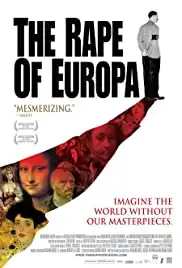
ACTOR
Joan AllenE. Randol SchoenbergMaria AltmannWolfgang Fischer
DIRECTOR
Richard Berge,Bonni Cohen,1 more credit
SYNOPSICS
The Rape of Europa (2006) is a English,Russian,Polish,German,French,Italian movie. Richard Berge,Bonni Cohen,1 more credit has directed this movie. Joan Allen,E. Randol Schoenberg,Maria Altmann,Wolfgang Fischer are the starring of this movie. It was released in 2006. The Rape of Europa (2006) is considered one of the best Documentary,History,War movie in India and around the world.
More
The Rape of Europa (2006) Trailers
 Art Is...The Permanent Revolution (trailer)
 Home of the Brave - Trailer
 One Piece: Kaizoku Musou 2 - "Story Log Trailer"
 The Rape of Europa Trailer
 The Rape of the Sabine Women - Trailer
 Rape Zombie: Lust of the Dead 4 theatrical trailer - Naoyuki Tomomatsu-directed movie
 IDFA 2006 | Trailer | Welcome Europa
 Stolen Trailer
 Europa trailer
 The Stabilizer Trailer
Same Actors





The Rape of Europa (2006) Reviews
A must-see for art or WWII historians as well as those simply interested.
The Rape of Europa is a slick, well shot, well directed, interesting, highly informative and still entertaining documentary from the directorial triumvirate of Bonni Cohen, Nicole Newnham and Richard Berge. The documentary uses the book by Lynn H. Nicholas of the same name as a kind of runway for its exploration of the Nazi's systematic plundering of Europe's art. The film incorporates interviews, voice over narration. vintage footage photos and documents that all work cooperatively in making this documentary work in every respect. The film takes its viewers on an in depth journey of the subject through seven European countries, most notably France, Italy, Poland and Germany. The film sheds light on Hitler's own personal art career, from his rejection of Vienna's art Academy to his plans to amass the world's largest art collection in his ideal city. Interesting and relatively unknown facts are uncovered that relate Hitler's art career to his actions as dictator. Hitler's antisemitism, as one interview subject suggests, was likely fueled by his rejection from Vienna's art Academy as the academy's panel was largely Jewish. Hitler also created a "hit-list" of famous works he wanted for his collection, most of which directly correspond to his invasion of various European countries. Art collecting was a highly important pastime among Nazi officials for a variety of reasons, as discussed largely with Herman Goering and Hitler himself who had amassed enormous, unparalleled personal collections, largely through theft. Another highly interesting portion of the film shows the perilous and miraculous journey many of these works underwent. As a Nazi invasion loomed, hundreds of people, in France's world famous Louvre for example, gathered and worked tirelessly, packing the priceless art and transferring it to castles throughout the French countryside. The daughter of the man entrusted with the Mona Lisa is interviewed in the film. The film examines the seventy-year plus struggle to restore and reclaim these stolen masterpieces, many of which remain unaccounted for. The allied position of fighting while simultaneously trying to maintain the hostage art is also discussed in detail, as well as the Allied efforts to return the art after it was repossessed. The film is a must-see for art or WWII historians as well as those simply interested.
Giving Documentaries a Good Name
I have just returned from this film and am another satisfied customer. It always feels a bit strange going to the cinema to see a documentary, but docs always turn out to be so much better and more fulfilling than the blockbusters. A real whirlwind of emotions, the Rape of Europa is something in which everyone living in the western world has a stake. The destructive force of war on human beings and those things which are crucial to our humanity, our art, is put into a perspective that is about as balanced as we can hope to get. Many positive things I would say have already been said, so I will offer one criticism: the city of Dresden, once called the "Florence on the Elbe," was not mentioned in the film. As perhaps the worst bombed city of the war, and a city which had no military value whatsoever but was of incalculable worth culturally, I felt this was a major omission. Of course, the film covered an amazing amount of ground, and the Dresden bombing remains a touchy subject for many, so I can comprehend the constraints of time and the need to avoid charged tangents. However, as someone who has lived in that city (many parts of which remained ruins until only recently), I still would have liked to have heard it mentioned. That said, the film was wonderful on a whole. If only everything they showed in the cinemas were half as good.
Monuments Men without the smirk
Greetings again from the darkness. Watching the 2014 release of The Monuments Men inspired me to re-watch this fascinating documentary on the same subject. Thanks to the interviews of real life Monuments Men like Harry Ettlinger, Kenneth Lindsay, Charles Parkhurst and Bernard Taper, we better understand the overwhelming mission these folks were on, and how even today, some battles wage on over the rightful owners of artwork. To drive home the point that there is more at stake than just pride, the case of Klimt's "Portrait of Adele Bloch-Bauer I" is studied. Adele's niece continued her litigation against Austria until a court finally awarded her the painting (and 3 others). She sold "Adele" for $135 million to a collector. So clearly the cause is not just for mother country. Economics play a huge role. Regardless, the more interesting portion of the story is the relentless pursuit of stolen artwork, artifacts, furniture and collectibles, and the attempts to return them to the rightful owners. That, combined with the devastating architecture destruction brought on by WWII, really make it a bittersweet story. The breathtaking photographs and archival film footage provide a clear understanding of the breadth of destruction. Seeing the before and after of the Monte Cassino monastery is just crushing. Gaining perspective on the damaged frescoes, some dating to 1360, when Pisa's Camposanto was bombed drives home the significance of culture and history. Seeing the aftermath of the bombing of Florence's iconic bridges brings tears to the eyes. The most impressive piece is that so much of Europe has been rebuilt in the past 7 decades. Maybe that goes to answer the question of whether a human life is worth protecting art. People survive and find a way ... even if Rafael's "Portrait of a Young Man" is still missing. This is based on the book by the Lynn Nicholas, and the film does a terrific job of presenting how the war impacted Russia, Germany, Italy, France, Austria and Poland. It's also tough to reconcile, as one of the Monuments Men attempts, the idea that the Nazis were so careful with the stolen artwork while simultaneously exterminating so many Jewish people. Maybe things would have been different if a young Adolph Hitler had been accepted to art school.
A very powerful documentary that shows how the movie theater is a social force
As everyone in America retreats to their suburban mansions and the computer screens, it is a great experience to go out to the movies and see a film of real social import. If you love history and art, like I do, you certainly do not want to miss this film. The brutal effects of Nazi destruction never goes away, it keeps on coming, like a nightmare from the 20th century that we are all dreaming about. This film demonstrates the innate power of art. It shows, through a deep examination of the looting of Europe's treasures, what these works really meant to the countries who had them. And it reveals the utterly strange connection between the life of Hitler, failed art student, and the hellish destruction he unleashed on the world. In this season of filmic dreck at the mall, this strong documentary is definitely worth seeking out.
Trying to be fair
This is a good movie and it is biased. It is trying to tie the looting of art to holocaust. That is very wrong. Nazi ideology was wrong, inhumane and evil. Nazis took anything they wanted because they believed they owned Europe. Hitler was not a bad painter; he was against modern art. I have been painting for 39 years and I can assure you he is much better than many artists who are accepted into art schools at the time and today as well as some my students. His art is very much illustrative not lyric in the sense of story telling. In a few of his work that I have seen he has hold perspective and dimension well in place more than I can about a lot of paintings that are in the museums. He loved art and his vision was that he owns Europe and Germans are master race so he is going to take it all and make a very large museum. The reference of Hitler became anti-Semitic because he was rejected at art school is just childish. Hitler became anti-Semitic mainly because he believed Jews are responsible for Germany's defeat in WWI. He formed his Anti-Semitism in later years after his rejection and there is no reference of such in Mein Kampf, (one of the most $%^&ed up books I have ever read in regards to editing and scatter of subject in 4 languages including German). Holocaust was horrible; so was the loss of 23.5 million people of USSR. It also tried to portray USSR soldiers as looters by taking the art back. The efforts of people like Leonid Folinsky, the Soviet artist that discovered the Raphael's Madonna and Rembrandts, Rubens, etc. in salt mines in east Germany area and managed to pull them out of the water is not mentioned other than they were sent to loot for USSR. It ignored the fact that if Nazi's took and destroyed so much of USSR's art then if after the war USSR keeps some of the German art it is just a payment. It almost implies that Hitler's atrocities should be wiped off with the end of Nazi party and Germans should not have to pay any damage into the equation. Obviously every Jewish art dealer descendant (or Holocaust victim) should get all his or her art back. Obviously it helps the fact that as soon as they get it back they can sell it to likely end up in an American museum. . What about the descendants of the art in USSR? While I appreciate the efforts of Americans who did the saving of the artifacts I do not think they were the only ones. Many natives of France, Holland, Austria and other countries helped the underground networks with efforts to save the artifacts and their efforts were downed a little with exception of one. The use of some new footage of the WWII is refreshing. I did not see much reference to the art in Holland or Belgium. I dislike the title of the movie as "Rape of Europe" as a Nazi "thing". Napoleon did nice job of raping the Europe himself; where do you think all the Italian and Spanish art in Louvers comes from? How about rape of Egypt, Persia, Greece, ... England obviously did not rape India or any of its sub kingdoms! What about rape of Iraq as recent as 2003? 58 years after WWII! I think they were on the level about the bombing of Monte casino but the firebombing of Dresden was played down a lot, considering the loss of the art there. War is a horrible part of human history and taking booty has always been a part of it. Nazi ideology was wrong, inhumane and evil but taking art works and valuables was not their invention. The part that talks about how they had lists of artwork upfront and before hand due to their "evil" minds... That is just the naive talk of the talker. Germans are born with a list of to do's. Anybody that has spent a little time learning German and their people would know it. Everything is always calculated and documented! They even documented the holocaust themselves with very extreme precise records.