
VidMate
Free YouTube video & music downloader

ACTOR
Vincent LindonSandrine KiberlainAure AtikaJean-Marc Thibault
DIRECTOR
Stéphane Brizé
SYNOPSICS
Mademoiselle Chambon (2009) is a French movie. Stéphane Brizé has directed this movie. Vincent Lindon,Sandrine Kiberlain,Aure Atika,Jean-Marc Thibault are the starring of this movie. It was released in 2009. Mademoiselle Chambon (2009) is considered one of the best Drama,Romance movie in India and around the world.
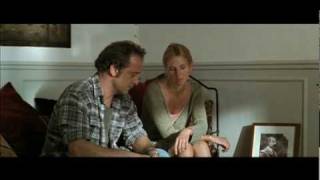
Jean, his loving wife and son live a simple, happy life. At his son's homeroom teacher Madamoiselle Chambon's request, he volunteers as substitute teacher and starts to fall for her delicate and elegant charm. His ordinary life between family and work starts to falter.
Mademoiselle Chambon (2009) Trailers


Same Actors


Mademoiselle Chambon (2009) Reviews
A sweet sadness
In Stéphane Brizé's restrained fourth film (which he's adapted from a 1996 Éric Holder novel) a tight-lipped mason named Jean (Vincent Lindon) in an unnamed provincial French town meets his little boy's schoolteacher, the Mademoiselle of the title (Sandrine Kiberlain) and his world subtly changes. He loves his wife Anne-Marie (Aure Atika), who works in a print shop, and little Jérémy (Arthur Le Houerou), but Mademoiselle (her name is Véronique, but Jean never gets beyond the formal "vous" with her) has a refinement, a delicacy. And she plays the violin -- classical music that Jean seems unfamiliar with but delighted by. At first Mademoiselle asks Jean at the last minute to fill in and speak to her class (and his son's) about his work, an experience that also gives him great pleasure. Perhaps he enjoys indirectly telling this refined maiden lady who attracts him about his basic, satisfying work, building houses that are always different and will last, as one child asks, "for your whole life." Then when she asks help with a broken window at her flat, he takes a look and then insists on being the one to replace it. Then comes the music. He insists that she play; photos and the violin tell him of her former profession. This film has only a hint of sex, and no raw physicality, but it works with the body, with silence, and with gesture. Throughout it shows Lindon acting the part by doing hard construction work on screen, breaking up paving with a pneumatic drill, mounting the window, laying bricks of a wall, and so on. He even walks like a skilled laborer. Anne-Marie is always ironing, cooking, shopping, making lists. Mademoiselle Chambon reads, rests, places her hand delicately on her neck. Jean tenderly washes the feet of his old father (charming veteran Jean-Marc Thibault). Finally the teacher plays a recording of chamber music at her place for Jean and as they sit together listening they slowly hold hands, embrace, and cling together as if at home, but afraid to go further. This carefully paced sequence is one of the film's most effective. However many "make-out" scenes you may have seen, this one still feels fresh. Lindon is like a fine mason in his acting, slowly, patiently laying the bricks of gesture. A silence and a pause can speak volumes. Both Véronique and Jean fight their attraction. And can it go anywhere? But it keeps growing, despite gestures in the opposite direction. Jean tells Mademoiselle that her CD's interest him even though he hasn't listened to them yet. She usually changes schools every year, but tells him, in a key scene, that she's been asked to fill in for someone and stay on. But instead of expressing enthusiasm, Jean blurts out that his wife is pregnant. This is one anchor to the family: one child, and another coming. Another is Jean's father. Jean and Anne-Marie are planning a big birthday party for the old man at their house with family members coming from all over. Family matters. But Jean shows how far his feelings have gone in another direction -- even though we've seen only those restrained moments -- when he invites Mademoiselle Chambon to come and play the violin for his father. It's not certain that his wife has suspected anything, but she has noticed that Jean seems bored, indifferent, irritable. And she might suspect why now. What follows is surprising -- agonizingly suspenseful -- and quite familiar. We've seen this kind of story before. We've seen these characters before. But we've rarely seen more delicacy than Bizé brings to his treatment of the story, which is haunting in a classic way without feeling in any way retro -- though perhaps the provincial setting was chosen to avoid that, to have events unfold in a place that's less aggressively modern and hip than Paris. Lindon and Kiberlain are husband and wife, though now estranged, which may help explain the magnetic energy in their scenes together. There are plenty of lines here, but there's a distrust of language, together with a touching desire to use it properly. "I'd like to hear more tunes," Jean tells Véronique. "Is that right, to say 'tunes'?." At the outset, Jérémy poses a homework problem to his parents to find the "direct object" in a sentence and they haven't a clue, but patiently figure out what this means. Bizé is great with the children. Arthur Le Houerou as the son is unfailingly alive and natural; and his classmates are spontaneous and charming (though primed, as classes are) when they excitedly ask Jean about his work. If there is a weakness to the film it's the danger that the differences of class and culture are pelled out a little too clearly. Lindon is a magnificent actor, but as a man with many illustrious relatives and one-time suitor of Princess Caroline of Monaco he is not exactly drawing on personal experience in playing a mason whose father was also a mason. Nonetheless he is for the most part utterly convincing. It's the film itself that plays on broad differences that a screenplay of 90 minutes duration cannot quite adequately delineate. Lindon has a harried, careworn, but solid quality that fits a working man in need of reawakening. Kiberlain seems held inward, decent but tragically needy. You wouldn't know that she's been around the block with the actual Lindon and had a child by him; she could be this uptight maiden lady on the brink of lifelong spinsterhood. There's a sadness about her, a sweet sadness. Opened in mid-October 2009 in Paris, this film is part of the Rendez-Vous with French Cinema at Lincoln Center for 2010. What a contrast with the mad body-presses and adulterous whirlwind of another film in the series, Cédric Kahn's Regret. When it comes to the varieties of love, the French have the bases covered.
The Quiet Ache of Infatuation
MADEMOISELLE CHAMBON is a delicate, quiet interlude in the life of a construction worker in a little village whose gentle life is momentarily disrupted by the awakening of feelings of infatuation and the aftermath. Based on the novel by Eric Holder and adapted for the screen by Florence Vignon and director Stéphane Brizé, this little miracle of a movie is what the French do best - understated appreciation for passing passion in a world of ordinary days. Jean (Vincent Lindon) is a construction worker happily married to Anne-Marie (Aure Atika) and adoring father of young son Jérémy (Arthur Le Houérou) and loving son of his retired builder father (Jean-Marc Thibault): he spends his hours away from his work tutoring his son with his wife and bathing his father's feet. Jérémy's new schoolteacher is the very reserved but kind Véronique Chambon (Sandrine Kiberlain, in life the wife of Vincent Lindon!) who requests that Jean speak to her class about his occupation as a builder - an assignment Jean is flattered to accept. The presentation goes well and Véronique hesitantly asks Jean to repair a window in her home. Jean accepts the job (Anne-Marie thinks it is such a kind gesture that she asks Jean to invite Véronique to lunch). Jean replaces the window for the quietly reserved and anxious Véronique, and afterward Jean, noticing that Véronique plays the violin, requests she play for him a 'tune'. It is obvious that the peripatetic teacher is lonely, and it is also obvious that Jean is struck by the fact that a woman of education and musical talent would pay attention to a simple construction worker. In a weak moment the two exchange a kiss and that kiss alters the manner in which each of these two gentle people react to life. The results of this chance encounter play out in the conclusion of the story, a story so tender and yet so grounded in the realities of life that it takes the viewer by the heart and doesn't let go. The many varying moments of intimacy, whether those moments are between Jean and his son, Jean and his father, Jean and his wife, and Jean with Mademoiselle Chambon, are photographed like paintings by cinematographer Antoine Héberlé. The entire cast is excellent and the performances by the five leading actors are superb. The musical score consists of original music by Ange Ghinozzi with a generous sampling of music by Sir Edward Elgar and others. This frail bouquet of a film appreciates silence, the unspoken word, and the natural emotions of ordinary people living ordinary lives. It is a multifaceted treasure. Grady Harp
Vincent Lindon and Sandrine Kiberlain at their very best.
I am not a romance films lover. I prefer brutal, thrilled and action movies; not for the squeamish. But this one, totally different, is a masterpiece for me. A real monument of fineness, sensibility and emotion. Kiberlain and Lindon were, not so long ago, a couple in real life. That explains everything on the screen. Some sequences are outsanding. When shy Lindon asks shy Kiberlain to play a disc of HER music, and when they listen to it, side by side, I felt warmth under my skin. An unforgettable moment. Pure emotion. At one hundred per cent. And the sequence at Lindon's father's anniversary, when Kiberlain plays violin, her eyes closed, plunged into her music, her world, her soul. At this moment, Lindon's wife stares at her husband's face, and Kiberlain's one. And she understands. Everything. But keeps this for her. I won't spoil the end of this real gem. But, believe me, all long this story, I felt my eyes wet.
So right on what life is!
This is a simple story on kind people: Jean tries his best to live his life as a good person. When he describes his mason's job, we understand he likes it deeply and is quietly proud of it. His simplicity moves the teacher and the watchers. She invites him to see a problematic window in her flat. This change of window is like a symbol of what will be happening to them: Jean asks her to play the violin for him, and music will bring him elsewhere, beyond his today's limits -the classical music itself plays an important part, Jean is deeply moved by this discovery too, not only because she is playing the music herself-. This moment is for me a pure beauty. On her side, she is also brought to a new area in her life where there is someone who loves when she plays music, who is eager to learn and to open himself, someone who cares about others and about her: this is building confidence in her and adds a new depth in her interest in people and in life, although we understand there will be pain for both of them!No one wants to hurt any one around! The choice will have to be done and these good people will prefer being hurt themselves than their beloved around. When Jean asks her to accept and play the violin for his father' birthday party, he is so straightforward, so daring for a simple -nearly shy- person, that it seems clear he has reached also a new confidence, he has gone behind the window. We also think about what is exactly loving someone: Jean' wife understands so simply it means letting the other one be happy, grow and develop himself without trying to pressure him and use guilt. She is also building a new confidence in her husband and thus in life... This moment has been a very fulfilling for me: thank you Monsieur Brize!
Subtle and credible romance of ordinary people
This is a slow film, and I find certain takes to be unnecessarily long. For example, the opening scene with Jean, the male lead, noisily working with his jackhammer can be shortened with no impact to the story telling. However, this will be all the fault-finding I can do. The acting from the three lead actors is great and the music, though sparse, is appropriate. Jean is a quiet, responsible blue collar worker who takes care of this wife and son, and shows great love for his ageing father whose feet he often washed with care and tenderness. He is a simple person and a good human being. In fact, there are no bad characters in this film. What it is about are choices in life, and there are no right or wrong choices here. When fate brought Jean to his son's teacher, Veronique, who gives him a taste of another world he had no previous exposure to, he was enchanted. And this enchantment transforms itself to a fierce love for her which is all consuming. Jean is shy, and looks down to the ground most of the time. So moments of intimacy are subtle and subdued. But you can feels the intensity of Jean's feeling and what it does to his mind. In the end he has to make a choice: the love of his life or his responsibility to his wife, son, and ageing father, all of which he care about. No easy and simple decision here. And it will be difficult to predict what we will do when we are in his position, knowing that either way there will be no happy ending for all. But, hey, such is life. One can argue the very confrontation of this choice makes life worth living. This is simply a great romance story of very real, ordinary people told without fanfare. A great French cinema experience in my opinion.